


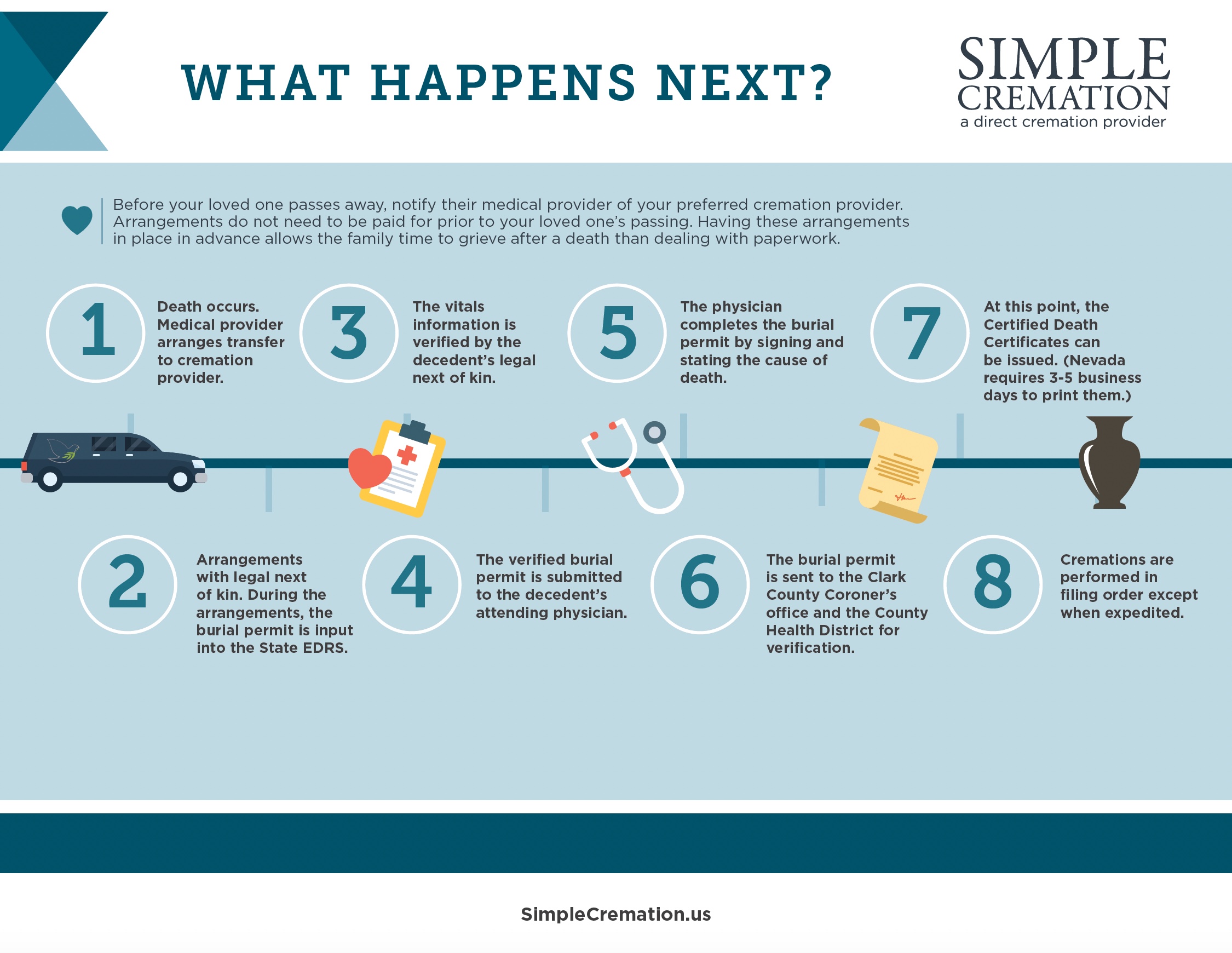
After a person has passed away, there are several medical, legal and logistical steps leading up to burial or cremation. If you are next of kin, or part of the family going through this loss, it helps to know what comes immediately after a death.
“Next of kin” is a term for closest living blood relatives or legally recognized family members. Legally, the list of people who take priority as next of kin (in descending order) are: spouse/registered domestic partner, children, grandchildren, parents, siblings, nieces/nephews and grandparents, and then aunts/uncles and cousins.
First, after death has been confirmed by the hospital, hospice or other authorities, your loved one will be transferred from their place of death to a funeral home. If the coroner is involved and your loved one is in the care of the coroner’s contracted mortuary, we can assist you with transferring him or her into our care. At this stage, we confer with you, as legal next of kin, to obtain required personal details.
The funeral director will input the burial permit into the state’s Electronic Death Registry System, or EDRS, a secure platform that allows all parties involved to more efficiently file, process and track death records. Though called a burial permit, this authorization form applies to cremations as well.
The vitals information (medical proof of death) is then verified by the next of kin, and the verified burial permit is submitted via EDRS to the decedent’s attending physicians, who complete the burial permit by signing and stating the cause of death.
Once verified and signed, the burial permit is sent to the Clark County Coroner’s office and the County Health District. These entities record the information, then authorize issue of a certified death certificate. Nevada requires three to five business days to print official copies of certificates. Over the coming weeks and months, you will need official copies of the death certificate to send to life insurance companies, banks, probate court, pension providers, creditors or other administrative entities.
Once death certificates are available, cremation can take place. Cremations are performed in order of filing, except when expedited, and Simple Cremations can assist with information on how to follow local and federal rules when scattering ashes. A variety of urns are also available to choose from.